
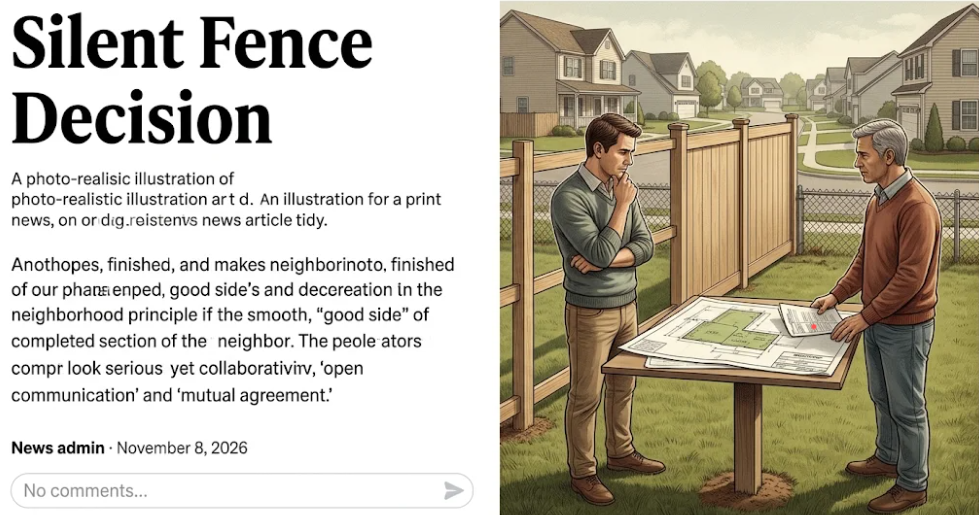
Understanding Fence Anatomy and Local Regulations
When installing a privacy fence, the structure typically consists of two distinct sides: the smooth, finished side (often called the “good side”) and the interior side, which exposes the support posts and horizontal rails. Standard fencing etiquette—and in many jurisdictions, strict municipal code—dictates that the finished side must face outward toward your neighbors and the street. Beyond aesthetics, local zoning laws and Homeowners Association (HOA) guidelines frequently specify height limits, material choices, and required setback distances from property lines. Ignoring these regulations can result in mandatory modifications or complete removal at the owner’s expense.
The Importance of Property Boundaries and Communication
Building a fence without a formal property survey is one of the most common triggers for neighborhood disputes. Relying on existing landscape features, old stakes, or oral agreements from previous owners can lead to accidentally encroaching on adjacent land. Professional boundary surveys provide legal certainty, preventing future conflicts or complications when selling the property.
Equally important is proactive communication. Informing neighbors about your plans, intended timeline, and structural choices before breaking ground fosters goodwill. In many cases, open discussion allows neighbors to share construction costs or agree on shared maintenance, turning a potential point of friction into a collaborative effort that benefits both properties.