
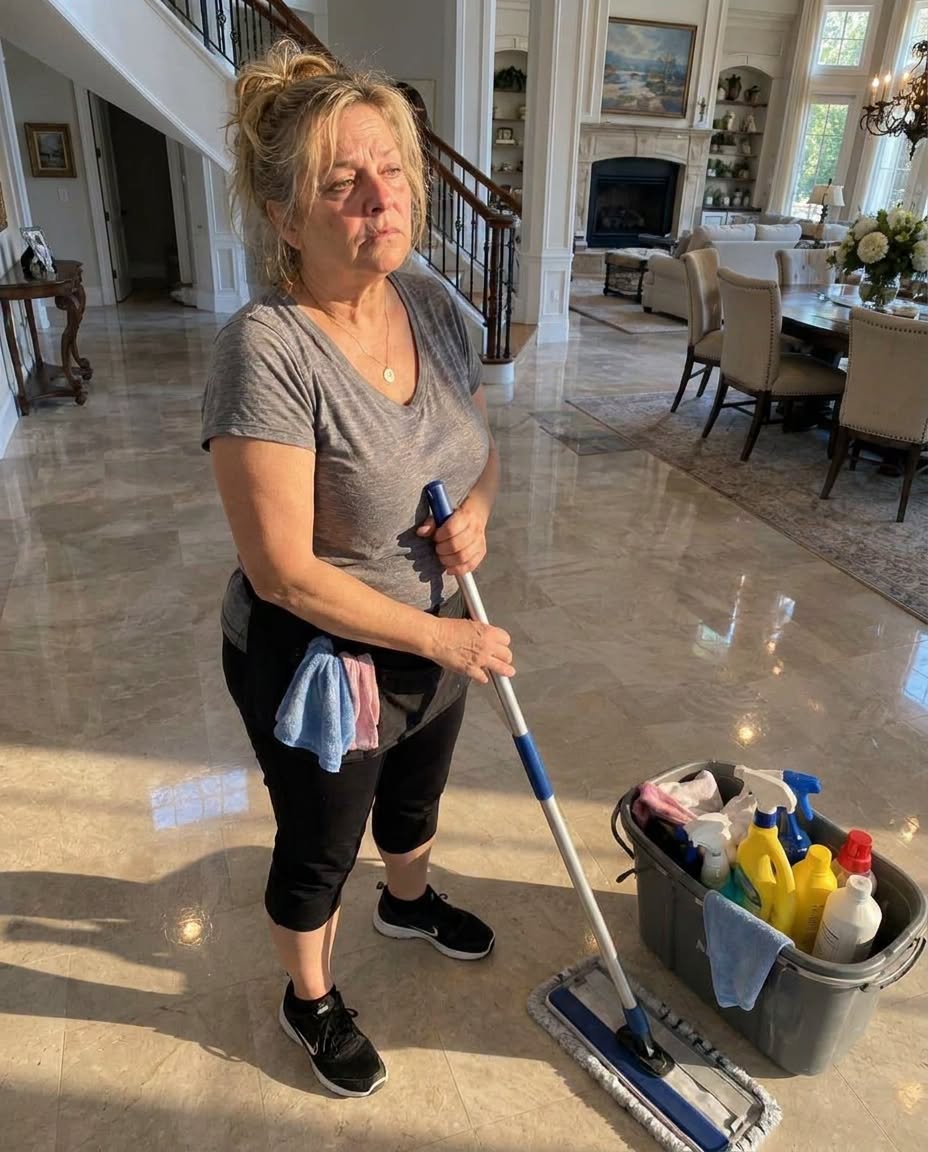
“Leave your supplies at home,” Mrs. Whitaker told me on the last Thursday I ever cleaned her house. By then the piano was gone, the rugs were rolled up, and pale rectangles marked the walls where family photographs had hung for decades. I had just finished scrubbing the black-and-white kitchen floor for what must have been the four-hundredth time when I took the brass house key off my ring and held it out to her. Instead of taking it, she folded my fingers around it and said, “Not yet. Come back Saturday at eleven.” I asked whether she needed help after the movers. She shook her head. “I’m asking you to visit, Carly.” In eight years, she had never once asked me to sit down as anything other than the woman who cleaned her house.
I had met Margaret Whitaker when I was newly separated, nearly broke, and trying to build a cleaning business with a nine-year-old daughter named Willa and forty-one dollars in my checking account. Mrs. Whitaker became my first dependable client: every Thursday, nine to two, a check on the counter and a handwritten note telling me which towels were hers, which floor could not tolerate bleach, or which window stuck. For years I ate lunch in my car because I did not want to make myself too comfortable in her kitchen. Then life quietly braided us together. She let Willa spend a snow day counting all forty-two windows in the house and kept the floor plan she drew. When Mrs. Whitaker fell in her bathroom and lay there for more than a day with a broken hip, she told me later that she held on because she knew Thursday would come and I would walk through the door. I found her, called 911, stayed until her daughter arrived, and then returned the next Thursday to water the plants and keep the house from feeling abandoned.
By the time Mrs. Whitaker announced she was moving to Oregon at eighty, Willa was seventeen and dreaming of studying architecture at a university we could barely imagine affording. On that Saturday visit, Mrs. Whitaker set the kitchen table with china, cloth napkins, chicken salad sandwiches, grapes, and iced tea, and told me she had watched me eat lunch in my car every week for eight years. Then she brought out an old shoebox tied with rubber bands. Inside were every little note I had ever left her—receipts, reminders, repairs, Willa’s drawings, even a hospital napkin on which I had once written, You’re not alone. Taped inside the lid was an envelope addressed to Willa. The statement inside showed an education account in her name with a balance of more than $58,000. Mrs. Whitaker had begun funding it the very first week I worked for her, contributing roughly the same amount she paid me each Thursday and increasing those contributions when she raised my pay.
I tried to refuse until she told me why. Her own mother, Rose, had cleaned houses for decades, and one of those employers had quietly financed Margaret’s college education in almost the same way. Margaret had spent a lifetime feeling she owed that kindness forward. She had never told me because she knew I would have stopped her, and she had structured the money specifically for Willa’s education rather than as cash for me to spend. We reviewed the account documents with the financial institution so there would be no confusion over ownership, beneficiary designation, or withdrawal rules, and Mrs. Whitaker made it clear that any tuition disbursements would follow the account’s formal terms rather than pass informally through my hands. “This isn’t charity,” she said. “It’s a debt I’ve been waiting fifty years to repay.” I finally agreed on one condition: she had to return for Willa’s graduation, visit her at college, and someday see the first real house Willa designed.
She kept every promise. Willa got into the architecture program, and Mrs. Whitaker stood beside me at graduation with one hand pressed over her heart as my daughter crossed the stage. Years of Thursdays had carried farther than any of us understood. I still clean houses, and I still keep the old brass key on my ring even though it no longer opens 418 Linden Street. My newest Thursday client is an eighty-three-year-old widower named Mr. Dean. The first time I saw a cold cup of tea on his counter, I checked every room until I found him sleeping safely in his recliner. The next week I made two chicken salad sandwiches, put them on real plates with cloth napkins, and ate lunch with him in the kitchen instead of going out to my car. Before I left, I wrote him a note beside his tomato plants: See you Thursday. You’re not alone.